I have been heads down coding for weeks.
Building GAIDE™ Chicago, building the BALOMMON™ app, building the music portal, wiring up Stripe, setting up Brevo, writing specs. It has been a lot.
Before I film the Build Journal video on this I want to get these five tips down in writing because I think they are genuinely useful for any builder working on a real product right now.
These are not theories. I use all five of these every single day.
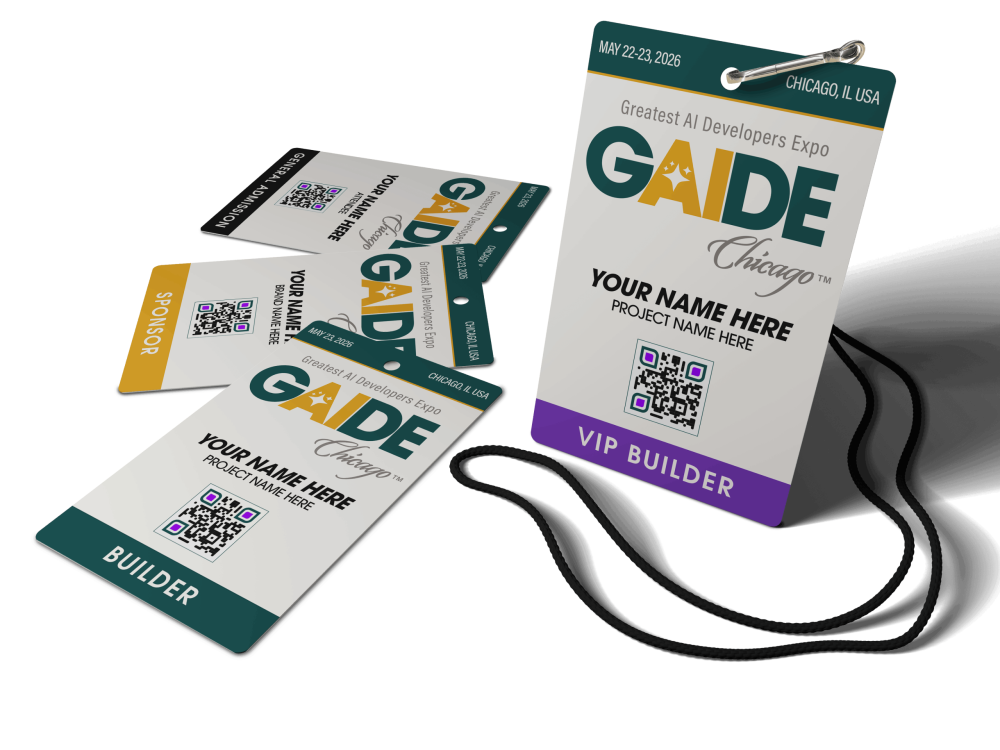
Before I built anything – any website, any app, any social post – I built a GAIDE™ Chicago brand guide.
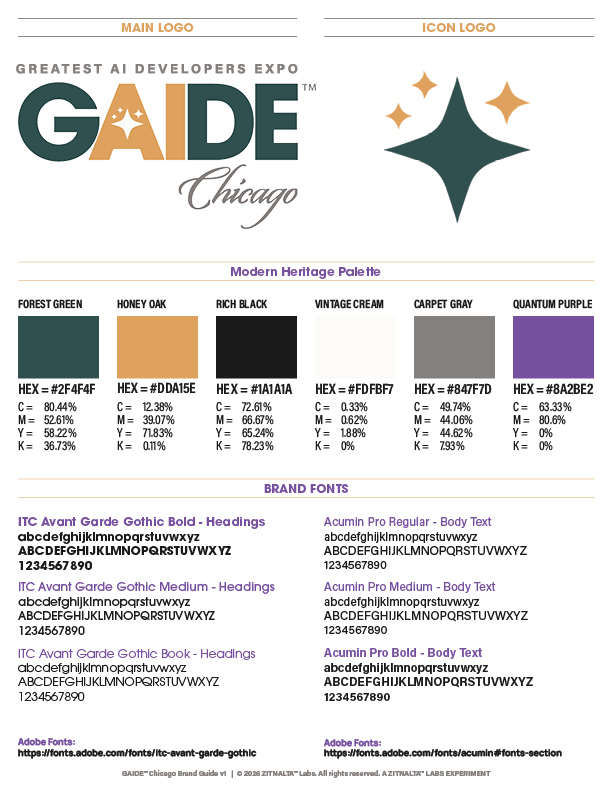
Not just a logo. A full brand guide. Colors in CMYK for print and hex for screen. Typography. Spacing. Voice. All documented in one place.
And I went one step further. I have what is called a trade dress. That is the combination of visual elements that make your brand immediately recognizable – your color palette, your layout patterns, your typography choices – all working together consistently across every surface.
Forest Green. Honey Oak. Quantum Purple. Rich Black. Vintage Cream. Every screen I build uses these exact colors. Every piece of print uses these exact CMYK values.
When I hand my brand guide to an AI agent and say build me a screen – it knows exactly what GAIDE™ Chicago looks like. No guessing. No inconsistency. No going off brand.
Your brand guide is your agent’s instruction manual. Build it first.
I have a document called the Sovereign Messaging Framework. It has one job – make sure I never say the wrong thing.
It has a prohibited terms list. Words like hackathon, buildathon, spots, tickets, packages – none of those words ever appear in my content. Ever. Because they are in my framework as hard blocks.
It has sovereign replacements. Instead of spots I say Max. Instead of tickets I say Experiences. Instead of sign up I say Request Invitation.
If you are building a brand and you do not have a messaging framework you are going to say the wrong thing in public eventually. You will use corporate language that undermines your positioning. You will be inconsistent across channels without realizing it.
Build your messaging framework before you need it. Not after you have already said the wrong thing.
Once you have your messaging framework — take it into your AI development environment and make it structural.
I use Google Antigravity IDE. Inside Antigravity I have three files loaded for every project.
The Rule fires on every single action globally. It never turns off. It catches prohibited language before it ever makes it into my code or my copy.
The Skill triggers when I am generating content. It knows my tier names, my sponsorship language, my approval email templates – everything about how GAIDE™ Chicago communicates.
The Workflow runs before I publish anything. Ten steps. Brand marks. Venue positioning. Sovereign voice. App strings. All verified before anything goes live.
Your AI agent is only as good as the instructions you give it. These three files are those instructions.
Security is not something you add later. You build it in from the beginning.
Two real examples from what I am building right now.
My swag ordering system for all paid Experience Tiers uses WooCommerce coupon codes that are single use, 100% discount, and expire on a fixed date. The moment someone uses a code it is dead. One code per person per tier. Nobody can share it and get duplicate orders.
My BALOMMON™ app uses Firebase security rules that prevent client-side vote manipulation. Votes are written only by Cloud Functions. Never by the client. The voting integrity is enforced at the architecture level – not by trusting the user.
Whatever you are building — think about who could break it before you open it to the public. Close those doors in the design phase. Not after your first incident.
If you are building anything production-level and market-ready, write the spec before you write the code.
Spec-driven development means you document exactly what you are building before you build it. Every feature. Every data model. Every user flow. Every edge case. You hand that spec to your AI agent and it builds to the spec – not to whatever it guesses you might want.
Feature-based clean architecture means your code is organized by feature, not by type. In my Flutter project I do not have one big widgets folder. I have a sponsor feature folder. A vote feature folder. A music feature folder. Each one is self-contained, clean, testable, and scalable.
When I bring an AI agent in to work on the sponsor screen it only touches the sponsor feature. It cannot accidentally break the voting system because they are separated by architecture.
This is how you build something you can actually maintain, grow, and hand off to another agent or developer without everything falling apart.
Five things.
None of these are optional if you are building something real for real customers.
The Build Journal video on all five of these is coming up next. Subscribe so you do not miss it.
And if you are a vibe coder with a market-ready product — your invitation to GAIDE™ Chicago is waiting at gaidechicago.org.
May 22-23, 2026. Chicago. 100 Max.
A ZITNALTA™ Labs Experiment.

 A ZITNALTA™ Labs Experiment
Dates: Preview Event
May 22-23, 2026
Location: River North
Chicago, Illinois USA
Experience Tiers:
VIP Builder: $499
Builder: $199
GA Support: $99
Are you a Builder? You're in the right place. Continue below.
General Admission → [Request GA Experience]
Sponsorship → [Request Sponsorship Experience]